
The Importance of Quality in Terminating Cat6 Keystone Jacks: A Comprehensive Guide
The Importance of Quality in Terminating Cat6 Keystone Jacks
Table of Contents
- Introduction to Cat6 Keystone Jacks
- Understanding Cat6 Cable and Its Applications
- What Are Keystone Jacks and Their Purpose?
- Why Quality Matters in Termination
- Best Practices for Terminating Cat6 Keystone Jacks
- Common Mistakes to Avoid When Terminating
- Testing and Validation of Termination
- Conclusion
- FAQs
Introduction to Cat6 Keystone Jacks
In the world of networking, **Cat6 keystone jacks** play a pivotal role in ensuring seamless communication across devices. These small but essential components facilitate the connection of network cables to wall plates, allowing for efficient data transmission. When it comes to terminating these jacks, the importance of quality cannot be overstated. Proper termination not only influences the performance of the network but also enhances its longevity.
Understanding Cat6 Cable and Its Applications
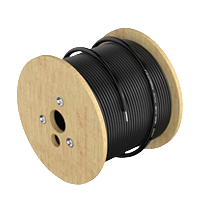
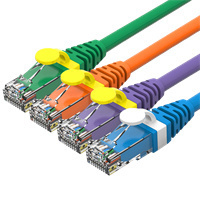
**Cat6 cable**, or Category 6 cable, is a type of twisted pair cable used in Ethernet networks. It is engineered to support data rates of up to 10 Gbps over a distance of 55 meters. This capability makes it ideal for applications that require high-speed internet and data transfer, such as streaming, gaming, and enterprise-level networking.
Cat6 cables are widely used in environments ranging from homes to large corporations. Their ability to minimize **crosstalk** and handling high frequencies makes them superior to their predecessors, such as Cat5 and Cat5e cables. Understanding the fundamentals of **Cat6** technology is essential for anyone involved in network installation and maintenance.
What Are Keystone Jacks and Their Purpose?
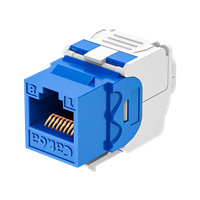
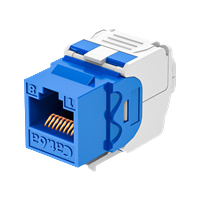
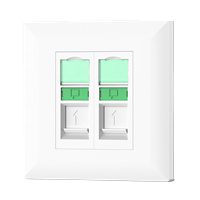
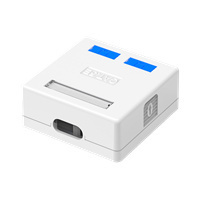
**Keystone jacks** are modular connectors that allow network cables to connect easily to wall plates, patch panels, or other devices. These jacks come in various formats, including audio, video, and data connections. When focusing on networking, Cat6 keystone jacks are integral for establishing robust and efficient internet connections.
The design of keystone jacks allows for easy installation and maintenance. They often feature a **snap-in design**, which simplifies the replacement of damaged or outdated components without needing extensive rewiring. By utilizing keystone jacks, network administrators can create flexible and organized communication systems that can be modified as necessary.
Why Quality Matters in Termination
**Quality termination** of Cat6 keystone jacks directly affects network performance. When we discuss quality, we are referring to several factors including:
- **Signal Integrity**: Properly terminated jacks ensure optimal signal quality. Poor termination can lead to data loss and slower speeds.
- **Durability**: High-quality materials and techniques increase the lifespan of the keystone jack and the network as a whole.
- **Reduced Error Rates**: Quality termination minimizes the likelihood of packet loss and errors in data transmission, which can severely impact network efficiency.
Investing time and resources into quality termination practices ultimately saves money and enhances productivity.
Best Practices for Terminating Cat6 Keystone Jacks
To ensure the best possible outcome when terminating Cat6 keystone jacks, adhere to the following best practices:
1. Gather the Right Tools
Before beginning, ensure you have the necessary tools at your disposal, including:
- **Wire cutters and strippers**
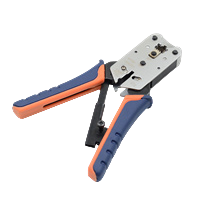
- **Punch-down tool**
- **Cable tester**
- **Keystone jacks and appropriate wall plates**
2. Follow the TIA/EIA Wiring Standards
Familiarize yourself with the Telecommunications Industry Association (TIA) and Electronic Industries Alliance (EIA) wiring standards. For Cat6 jacks, the T568A and T568B standards are most commonly used.
3. Strip the Cable Properly
Ensure that you strip the cable to the appropriate length without damaging the wires inside. Leaving too much exposed can lead to interference, while too little can make termination difficult.
4. Maintain Twisted Pairs
Twisted pairs should remain twisted as close to the termination point as possible to minimize **crosstalk**. This is crucial for maintaining signal integrity.
5. Use the Correct Punch-Down Technique
When using a punch-down tool, apply even pressure to secure the wires in place. Ensure that each wire is inserted into the correct slot corresponding to the wiring standard chosen.
Common Mistakes to Avoid When Terminating
Even experienced technicians can make mistakes during the termination process. Here are common pitfalls to avoid:
1. Inadequate Cable Stripping
Not stripping the cable adequately can lead to difficulties when inserting wires into the keystone jack.
2. Incorrect Wiring Order
Failing to follow T568A or T568B standards can lead to connectivity issues.
3. Over-Twisting or Under-Twisting Pairs
Over-twisting can create stress on the wires, while under-twisting can expose them to interference.
4. Skipping Testing
Always test the terminated jacks with a cable tester. Skipping this step can lead to undetected issues that may disrupt network functionality later.
Testing and Validation of Termination
Testing terminated Cat6 keystone jacks is not just a recommendation; it is a necessity. **Cable testers** can help identify issues such as:
- **Continuity**: Ensures that all wires are properly connected.
- **Cross-Talk**: Detects interference between wires.
- **Length**: Validates that the cable length is within acceptable limits for Cat6 performance.
By conducting thorough testing, you ensure that your installation is not only functional but also optimized for performance.
Conclusion
In summary, understanding the importance of quality in terminating Cat6 keystone jacks can significantly impact network performance. From the materials used to the techniques applied, every detail matters in achieving reliable communication. By adhering to best practices, avoiding common mistakes, and validating your work through testing, you can build a resilient network infrastructure that stands the test of time.
FAQs
1. What tools do I need to terminate Cat6 keystone jacks?
To terminate Cat6 keystone jacks, you will need wire cutters, a punch-down tool, cable strippers, and a cable tester.
2. What are the TIA/EIA wiring standards?
The TIA/EIA wiring standards (T568A and T568B) dictate the order in which wires should be connected in Ethernet cables to ensure proper signal transmission.
3. How can I ensure the quality of my terminated jacks?
Follow best practices for termination, maintain twisted pairs, and conduct thorough testing after installation.
4. What are the signs of poorly terminated keystone jacks?
Common signs include slow data transfer, frequent disconnection, and network errors.
5. Can I use Cat6 jacks with older Cat5 cables?
While you can use Cat6 jacks with Cat5 cables, the performance will not reach the capabilities of Cat6 due to the limitations of the older cable. It is advisable to use Cat6 cables for optimal results.
Latest news & events

Mar 17,2026
Keystone Jack: Essential Component for Modern Networking Solutions
Newest Keystone jack brands offer high-performance, reliable, and versatile connectors for modern networking needs
Learn more
Mar 12,2026
Network Cable Boots Enhancing Protection and Reliability in Modern Cabling Systems
China Network Cable Boots factory produces premium PVC covers that protect Ethernet connectors and ensure stable data flow
Learn more
Mar 11,2026
RJ45 Connector: The Essential Interface Driving Modern Network Connectivity
In the rapidly evolving world of digital communication, reliable data transmission is fundamental to the functioning of modern networks. One of the most widely used components enabling this connectivity is the RJ45 connector
Learn more

HYCONNECT provides integrated solutions for cabling infrastructure system copper and fiber. The major components including Cat5e/6/6A/7/8 keystone jack,patch panel,faceplate,plug and cable management,fiber optic patch cable,adapter,and fiber patch panel
No. 240, New Zhoutang Road, Qiaotou Town, Cixi City , Ningbo Zhejiang, China
