
180-Degree UTP Keystone Jack Enhances Structured Network Cabling Performance
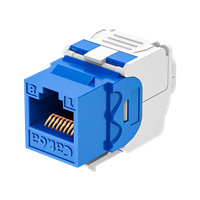
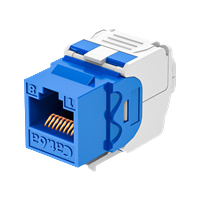
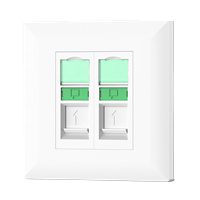
The networking industry is witnessing renewed interest in 180-degree UTP keystone jack solutions as demand grows for easier installation, reliable performance, and improved cable management in structured cabling systems. These keystone jacks — designed for use with Cat5e, Cat6, and Cat6A Ethernet networks — combine ergonomic termination, industry standard compliance, and robust electrical and mechanical features to meet modern data transmission requirements across data centers, offices, and residential installations.
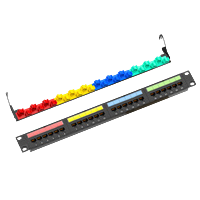
A keystone jack serves as a modular interface for connecting twisted-pair cabling to wall plates, patch panels, and surface mount boxes. The “180-degree” designation refers to the orientation of the insulation displacement contact (IDC) termination point relative to the jack body, enabling rear-facing cable entry. This layout facilitates more accessible punching down of cables, especially in shallow electrical boxes or crowded panel environments where traditional rear-entry jacks may be difficult to work with.
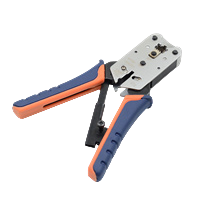
One key advantage of the 180-degree design is its compatibility with standard tools such as 110 and LSA dual-purpose punching tools, making installations more efficient for both professional technicians and DIY network builders. Visualized wiring schemes and color-coded markings help ensure correct pair alignment during termination, reducing the chance of miswiring and ensuring consistent performance.
The housing for these keystone jacks is typically made from high-quality flame retardant PC (UL94V-0 or UL94V-2) material, providing durability and safety in building environments. Internally, IDC clips are often angled at 45 degrees to secure the cable reliably, while the RJ45 contacts are gold plated to resist corrosion and maintain stable electrical performance. The materials selected and the adherence to international standards such as ISO/IEC 11801, TIA/EIA-568B.2-1 and EN50173 ensure that these jacks meet structured cabling specifications for data, voice, and video transmission.
From an electrical perspective, UTP keystone jacks designed for Cat6 or Cat6A applications show robust characteristics, including low DC resistance and contact resistance, high insulation resistance, and capability to withstand dielectric stress. Physical durability — such as jack insertion life exceeding 750 cycles and punching life of over 250 cycles — makes these solutions suitable for environments where moves, adds, and changes are frequent.
In addition to standard unshielded designs, some variations of 180-degree keystone jacks support tool-less termination options, which further simplify installation by eliminating the need for impact tools. Tool-less designs typically include intuitive push-down caps and clear T568A/B wiring labels, allowing users to make reliable network terminations manually and quickly.
The 180-degree orientation also offers benefits in cable management. Rear-facing terminations allow cables to exit horizontally from the jack body rather than directly backward, reducing bend stress and easing cable routing behind wall plates or within panel enclosures. This ergonomic advantage reduces strain on twisted pairs, helping preserve cable integrity and network performance.
Network professionals note that high-quality keystone jacks with robust IDC and RJ45 contact designs are essential for stable gigabit and multi-gigabit Ethernet deployments. Gold plating on contact surfaces ensures corrosion resistance and consistent conductivity, which is vital for maintaining signal integrity across network links. Compatibility with PoE (Power over Ethernet) standards such as IEEE 802.3af, at, or bt further extends the utility of these jacks for modern installations that power devices like IP cameras, wireless access points, and VoIP phones.
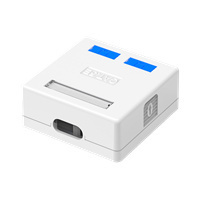
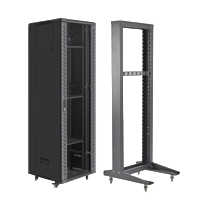
Applications for 180-degree UTP keystone jacks span many environments. In data centers and enterprise networks, they serve as termination points for horizontal cabling to patch panels and equipment racks. In office settings and residential smart networks, they provide connection interfaces in wall plates and surface mount boxes, enabling reliable network access throughout a building. Their role in structured cabling architectures helps support data, voice, and multimedia services while simplifying installation processes for technicians.
Industry trends indicate that as network speeds and complexity continue to increase, innovations in passive hardware like keystone jacks play a critical role in the performance and reliability of Ethernet networks. Solutions that offer ease of installation, adherence to international standards, and long-term reliability are becoming preferred choices among network designers and integrators. The continued adoption of 180-degree UTP keystone jacks underscores the importance of versatile, high-performance connectivity components in next-generation network infrastructure.
Latest news & events

Mar 17,2026
Keystone Jack: Essential Component for Modern Networking Solutions
Newest Keystone jack brands offer high-performance, reliable, and versatile connectors for modern networking needs
Learn more
Mar 12,2026
Network Cable Boots Enhancing Protection and Reliability in Modern Cabling Systems
China Network Cable Boots factory produces premium PVC covers that protect Ethernet connectors and ensure stable data flow
Learn more
Mar 11,2026
RJ45 Connector: The Essential Interface Driving Modern Network Connectivity
In the rapidly evolving world of digital communication, reliable data transmission is fundamental to the functioning of modern networks. One of the most widely used components enabling this connectivity is the RJ45 connector
Learn more

HYCONNECT provides integrated solutions for cabling infrastructure system copper and fiber. The major components including Cat5e/6/6A/7/8 keystone jack,patch panel,faceplate,plug and cable management,fiber optic patch cable,adapter,and fiber patch panel
No. 240, New Zhoutang Road, Qiaotou Town, Cixi City , Ningbo Zhejiang, China
