
Keystone Jack: Building the Foundation of Modern Network Connectivity
As digital transformation accelerates across industries, reliable and flexible network infrastructure has become a critical requirement for businesses, institutions, and residential environments. At the core of structured cabling systems lies a small but essential component: the Keystone Jack. Though compact in size, the Keystone Jack plays a vital role in ensuring stable data transmission, organized cabling, and scalable network design.
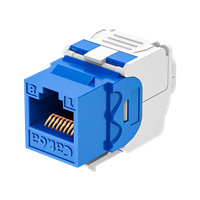
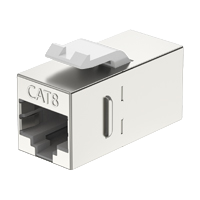
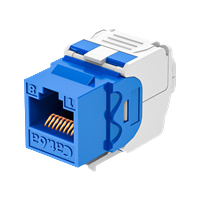
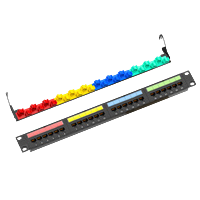
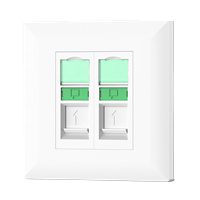
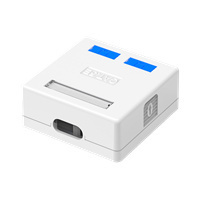
A Keystone Jack is a standardized modular connector used in networking and telecommunications. It is designed to snap into wall plates, patch panels, surface-mount boxes, and faceplates, providing a clean and professional termination point for network cables. Commonly used for Ethernet connections, Keystone Jack solutions also support voice, video, and multimedia applications, making them a versatile choice in modern installations.
One of the most important advantages of the Keystone Jack is its standardization. The keystone form factor allows different types of jacks to fit into the same openings, regardless of function. This modular approach simplifies installation, maintenance, and future upgrades. Network administrators can easily replace or upgrade a single jack without disturbing the entire cabling system, reducing downtime and long-term costs.
Performance is a key consideration in network components, and the Keystone Jack has evolved to meet increasingly demanding data requirements. Modern designs support high-speed standards such as Cat5e, Cat6, Cat6A, and beyond, enabling reliable transmission for gigabit and multi-gigabit networks. Precision-engineered contact points ensure consistent signal integrity, low crosstalk, and minimal interference, which are essential for stable network performance.
The flexibility of Keystone Jack applications has driven widespread adoption across multiple sectors. In commercial buildings, offices rely on structured cabling systems with neatly organized Keystone Jacks to support workstations, conference rooms, and data centers. In educational institutions, they provide reliable connectivity for classrooms, laboratories, and campus networks. Residential installations also benefit, as smart homes increasingly depend on stable wired connections for security systems, entertainment, and home automation.
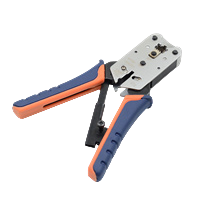
Ease of installation is another reason the Keystone Jack remains an industry standard. Most designs feature punch-down or tool-less termination options, allowing technicians to complete installations quickly and accurately. Clear color-coded wiring guides reduce errors and ensure compliance with industry wiring standards. This efficiency is especially valuable in large-scale projects where time and consistency are critical.
Durability and reliability further enhance the value of the Keystone Jack. High-quality housings made from flame-retardant materials protect internal components, while gold-plated contacts resist corrosion and wear. These features contribute to long service life, even in demanding environments such as data centers or industrial facilities where network reliability is non-negotiable.
From a market perspective, the global demand for Keystone Jack products continues to grow alongside network expansion and digital infrastructure investment. The rise of cloud computing, remote work, smart buildings, and Internet of Things applications has increased the need for structured, high-performance cabling solutions. Manufacturers respond by offering Keystone Jacks with improved shielding, higher bandwidth support, and compatibility with emerging standards.
Sustainability and efficiency are also shaping the future of Keystone Jack design. Compact modular systems reduce material waste during upgrades, while long-lasting components minimize replacement frequency. Some manufacturers are adopting eco-friendly materials and packaging to align with broader environmental goals, reflecting a shift toward responsible infrastructure development.
Looking ahead, the role of the Keystone Jack will remain fundamental as networks continue to evolve. Even as wireless technologies advance, wired connections remain essential for speed, security, and reliability. Keystone Jacks provide the structured backbone that supports these connections, ensuring networks can scale and adapt to future demands.
In conclusion, the Keystone Jack may appear simple, but its impact on modern connectivity is significant. By offering standardization, performance, flexibility, and durability, it serves as a cornerstone of structured cabling systems worldwide. As digital connectivity becomes ever more central to daily life and business operations, the Keystone Jack will continue to play a crucial role in building reliable and future-ready networks.
Latest news & events

Mar 17,2026
Keystone Jack: Essential Component for Modern Networking Solutions
Newest Keystone jack brands offer high-performance, reliable, and versatile connectors for modern networking needs
Learn more
Mar 12,2026
Network Cable Boots Enhancing Protection and Reliability in Modern Cabling Systems
China Network Cable Boots factory produces premium PVC covers that protect Ethernet connectors and ensure stable data flow
Learn more
Mar 11,2026
RJ45 Connector: The Essential Interface Driving Modern Network Connectivity
In the rapidly evolving world of digital communication, reliable data transmission is fundamental to the functioning of modern networks. One of the most widely used components enabling this connectivity is the RJ45 connector
Learn more

HYCONNECT provides integrated solutions for cabling infrastructure system copper and fiber. The major components including Cat5e/6/6A/7/8 keystone jack,patch panel,faceplate,plug and cable management,fiber optic patch cable,adapter,and fiber patch panel
No. 240, New Zhoutang Road, Qiaotou Town, Cixi City , Ningbo Zhejiang, China
