

Optimizing IT Infrastructure: The Growing Importance of Network Cable Management
In today’s digital era, reliable and efficient network infrastructure has become a cornerstone for businesses, data centers, and telecommunication providers. One of the most critical yet often overlooked aspects of network performance is proper network cable management. As organizations expand their IT environments to accommodate increasing data traffic, the demand for structured, well-organized cable systems has never been higher.
Network cable management refers to the strategic organization, routing, and securing of network cables to ensure optimal performance, prevent damage, and enhance overall network reliability. Poor cable management can lead to tangling, signal interference, and even hardware damage, which may result in costly downtime and maintenance challenges. Modern businesses understand that maintaining a clean and organized cabling system is not just about aesthetics—it directly impacts operational efficiency and system longevity.
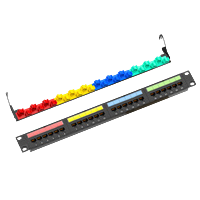
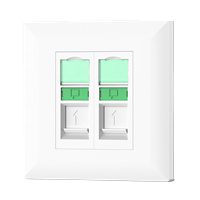
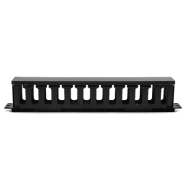
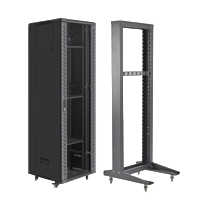
The components of effective network cable management include cable trays, racks, ducts, ties, labels, and patch panels. These elements work together to provide a structured path for cables, ensuring they remain secure and easily accessible for maintenance or upgrades. Advanced solutions also incorporate modular designs, allowing IT teams to expand or modify network layouts without disrupting existing connections. In data centers, where thousands of cables may coexist in a confined space, proper management reduces the risk of overheating by improving airflow around equipment, which is critical for maintaining optimal operating temperatures and preventing hardware failures.
The market for network cable management solutions has experienced significant growth in recent years, driven by rapid digitalization, cloud computing adoption, and the proliferation of Internet of Things (IoT) devices. Companies are investing in high-quality cable management systems to future-proof their IT infrastructure, support high-speed data transfer, and comply with industry standards. From small offices to large-scale enterprise environments, structured cable management has become a standard practice for IT departments aiming to enhance productivity and reduce operational risks.
Moreover, network cable management plays a pivotal role in simplifying troubleshooting and maintenance. Labeled and neatly routed cables allow technicians to quickly identify connections, trace network issues, and perform upgrades with minimal downtime. This is particularly crucial in critical industries such as finance, healthcare, and telecommunications, where uninterrupted network performance is essential. By reducing human error and improving accessibility, effective cable management contributes to the overall resilience of network systems.
Sustainability is another emerging factor in network cable management. Efficiently organized cabling reduces material waste, minimizes the need for excessive cable lengths, and supports energy-efficient data center designs by enhancing airflow. Companies are increasingly adopting eco-friendly materials and modular systems that can be reconfigured, promoting long-term environmental and operational benefits.
Industry experts emphasize that investing in network cable management is not merely a technical decision but a strategic one. As networks continue to expand and evolve, organizations with well-managed cabling infrastructure gain a competitive edge by ensuring reliable connectivity, reducing downtime, and facilitating future upgrades. Furthermore, with the growing prevalence of high-speed networking technologies such as 5G, fiber optics, and edge computing, the importance of organized, scalable cable management will only increase.
In conclusion, network cable management has evolved from a simple housekeeping task to a vital component of modern IT infrastructure. By adopting structured, efficient, and scalable cable management solutions, organizations can enhance network reliability, simplify maintenance, reduce operational risks, and support sustainable growth. As digital transformation continues to accelerate globally, the demand for professional cable management systems will remain strong, reinforcing their critical role in the seamless operation of today’s connected world.
Latest news & events

Mar 17,2026
Keystone Jack: Essential Component for Modern Networking Solutions
Newest Keystone jack brands offer high-performance, reliable, and versatile connectors for modern networking needs
Learn more
Mar 12,2026
Network Cable Boots Enhancing Protection and Reliability in Modern Cabling Systems
China Network Cable Boots factory produces premium PVC covers that protect Ethernet connectors and ensure stable data flow
Learn more
Mar 11,2026
RJ45 Connector: The Essential Interface Driving Modern Network Connectivity
In the rapidly evolving world of digital communication, reliable data transmission is fundamental to the functioning of modern networks. One of the most widely used components enabling this connectivity is the RJ45 connector
Learn more
Mar 02,2026
RJ45 Connector: Revolutionizing Network Connectivity with Tool-Free Installation
RJ45 connector manufacturers offer tool-free, quick-deployment modular plugs for reliable, high-speed Ethernet connections
Learn more

HYCONNECT provides integrated solutions for cabling infrastructure system copper and fiber. The major components including Cat5e/6/6A/7/8 keystone jack,patch panel,faceplate,plug and cable management,fiber optic patch cable,adapter,and fiber patch panel
No. 240, New Zhoutang Road, Qiaotou Town, Cixi City , Ningbo Zhejiang, China
