
RJ45 Connector: The Backbone of Modern Networking Infrastructure
In today’s fast-paced digital world, the demand for high-speed, reliable data transmission has never been higher. At the heart of wired network connectivity lies the RJ45 connector, a ubiquitous component that enables seamless communication across homes, offices, and large-scale enterprise networks. As networking technologies evolve, the importance of understanding the design, applications, and advancements of RJ45 connectors continues to grow.
What is an RJ45 Connector?
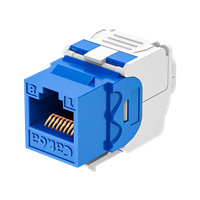
An RJ45 connector is an eight-pin modular plug primarily used to terminate twisted-pair Ethernet cables, such as Cat5, Cat5e, Cat6, and Cat6a. The connector allows for secure and reliable connections in local area networks (LANs), facilitating high-speed data transfer. Unlike older telephone connectors like RJ11, which have four or six pins, the RJ45 provides eight pins, enabling simultaneous transmission of data and supporting higher bandwidth requirements. Its compact design and standardization have made it a cornerstone of modern networking.
Applications Across Industries
The versatility of the RJ45 connector extends beyond traditional office LAN setups. It is widely used in data centers, industrial automation, smart home systems, and even IoT devices. In data centers, RJ45 connectors enable fast and stable connections between servers, switches, and routers, ensuring minimal latency and optimal performance. In industrial environments, they are often used in ruggedized or shielded forms to withstand harsh conditions, including temperature variations, dust, and vibration. Meanwhile, in residential settings, RJ45 connectors provide high-speed internet access, connecting computers, smart TVs, and gaming consoles to home networks.
Key Features and Advantages
Reliability – RJ45 connectors provide consistent electrical contact, reducing signal loss and ensuring network stability.
Ease of Installation – Modular design allows quick termination of Ethernet cables, making setup and maintenance straightforward.
Scalability – Standardized connectors allow network expansion without compatibility concerns, supporting both small and large-scale deployments.
Cost-Effectiveness – With widespread availability, RJ45 connectors offer a cost-efficient solution for wired network connections.
Support for High-Speed Data Transmission – Compatible with Cat5e and Cat6 standards, they can support speeds up to 10 Gbps under optimal conditions.
Recent Innovations and Developments
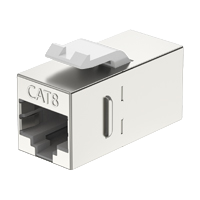
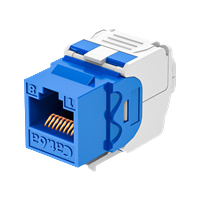
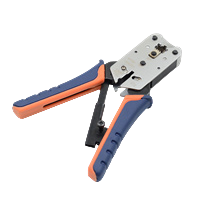
As network demands increase, RJ45 connectors have seen continuous innovation. Shielded connectors with metallic housings help reduce electromagnetic interference (EMI), providing cleaner signal transmission in high-density data environments. Toolless RJ45 connectors simplify installation, removing the need for specialized crimping tools. Some connectors now support Power over Ethernet (PoE), allowing devices like IP cameras, VoIP phones, and wireless access points to receive power and data through a single cable, reducing wiring complexity.
Maintenance and Best Practices
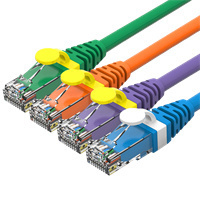
Proper installation and maintenance of RJ45 connectors are crucial for network reliability. It is recommended to use high-quality cables and connectors, ensure correct pinout configurations (T568A or T568B standards), and avoid excessive bending or pulling of cables. Regular inspection for corrosion, loose contacts, or damaged connectors helps prevent network downtime. In professional settings, pre-terminated RJ45 patch cables are often preferred for critical connections to reduce installation errors.
The Future of RJ45 Connectors
Despite the growing adoption of wireless technologies, RJ45 connectors remain essential for high-speed, low-latency, and secure network connections. As emerging technologies like 5G, edge computing, and cloud-based services place greater demands on network infrastructure, RJ45 connectors will continue to evolve, offering enhanced shielding, higher-speed capabilities, and better environmental resilience. Their standardized design ensures compatibility across generations of networking equipment, reinforcing their role as a backbone of modern communication systems.
Conclusion
The RJ45 connector is more than just a plug—it is a fundamental component enabling reliable, high-speed networking across multiple sectors. From office networks to industrial applications and smart homes, its versatility, reliability, and cost-effectiveness make it indispensable. As technology continues to advance, innovations in RJ45 connectors will ensure they remain a vital element in building robust, future-proof network infrastructures.
Latest news & events

Mar 17,2026
Keystone Jack: Essential Component for Modern Networking Solutions
Newest Keystone jack brands offer high-performance, reliable, and versatile connectors for modern networking needs
Learn more
Mar 12,2026
Network Cable Boots Enhancing Protection and Reliability in Modern Cabling Systems
China Network Cable Boots factory produces premium PVC covers that protect Ethernet connectors and ensure stable data flow
Learn more
Mar 11,2026
RJ45 Connector: The Essential Interface Driving Modern Network Connectivity
In the rapidly evolving world of digital communication, reliable data transmission is fundamental to the functioning of modern networks. One of the most widely used components enabling this connectivity is the RJ45 connector
Learn more

HYCONNECT provides integrated solutions for cabling infrastructure system copper and fiber. The major components including Cat5e/6/6A/7/8 keystone jack,patch panel,faceplate,plug and cable management,fiber optic patch cable,adapter,and fiber patch panel
No. 240, New Zhoutang Road, Qiaotou Town, Cixi City , Ningbo Zhejiang, China
